Δευτέρα 7 Νοεμβρίου 2022

Energy Transition Outlook 2022 by DNV

High energy prices and a greater focus on energy security due to the war in Ukraine will not slow the long-term transition

·        Europe aims to accelerate its renewables build-out to achieve energy security

·   In the rest of the world, tackling high energy and food prices may shift decarbonization down the list of priorities in the short term

·      The long-term influence of the war on the pace of the energy transition is low compared with main long-term drivers of change: plunging renewables costs, electrification, and rising carbon prices


COP26 and the IPCC have called for urgent action which has not materialized: emissions remain at record levels

·        Emissions must fall by 8% each year to secure net zero by 2050

·        Opportunities for intensified action abound – the transition is opening up unprecedented opportunities for new and existing players in the energy space

LONG-TERM FORECAST

Electricity remains the mainstay of the transition; it is growing and greening everywhere

·        With an 83% share of the electricity system in 2050, renewables are squeezing the fossil share of the overall energy mix to just below the 50% mark in 2050

·        Despite short-term raw material cost challenges, the capacity growth of solar and wind is unstoppable: by 2050 they will have grown 20-fold and 10-fold, respectively

Hydrogen only supplies 5% of global energy demand in 2050, a third of the level needed for net zero

·        Pure hydrogen use scales in manufacturing from the early 2030s and in derivative form (ammonia, e-methanol and other e-fuels) in heavy transport from the late 2030s

·        Green hydrogen from dedicated renewables and from the grid will become dominant over time; blue hydrogen and blue ammonia retain important roles in the long term

PATHWAY TO NET ZERO

We are heading towards a 2.2°C warming; war-footing policy implementation is needed to secure net zero by 2050

·        Massive, early action to curb record emissions is critical; the window to act is closing

·        No new oil and gas will be needed after 2024 in high-income countries, and after 2028 in middle and low-income countries.

Net zero means leading regions and sectors have to go much further and faster

·        OECD regions must be net zero by 2043 and net negative thereafter; China needs to reduce emissions to net zero by 2050

·        Renewable electricity, hydrogen and bioenergy are essential but insufficient: almost a quarter of net decarbonization relies on carbon capture and removal combined with land-use changes (reduced deforestation).

For more details, click below to download the DNV ENERGY TRANSITION OUTLOOK 2022 (EXECUTIVE SUMMARY):

https://maritimecyprus.com/wp-content/uploads/2022/10/DNV_Energy_Transition_Outlook_Executive_summary_2022_compressed.pdf


Σάββατο 29 Οκτωβρίου 2022

How to ensure safe operation when carrying hazardous chemical cargoes

In collaboration with CWA International, the Swedish Club has produced cargo advice to assist operators in the daily operation of their vessels, in relation to hazardous chemical cargoes.

A large range of chemical commodities is carried on board chemical tankers, totalling more than 5,000 different chemical products and grades. These chemical products often have a high minimum purity due to their intended end uses.

The contamination of chemical cargoes can often affect the suitability for their intended end use, and this can play a significant role in the cargo’s value. As a result, special consideration should be given towards these sensitive cargoes in order to ensure their proper carriage.

#1 Pre-loading: The large variety of different chemical cargoes carried by chemical tankers means that there is a possibility of incompatible products being carried consecutively. As a result, special attention must be paid to ensuring cargo tanks are thoroughly cleaned. Very large industry standard cleaning matrices are available covering the various grade changeover combinations.

In order to ensure sufficient tank preparation has been carried out, thorough pre-loading surveys of a vessel’s cargo tank/pump/heating equipment/ lines will be performed, including visual inspection of tanks together with wall-wash tests, when appropriate, prior to the loading of a ‘first foot’ trial quantity of cargo.

In addition to the pre-loading surveys often carried out by shippers’ surveyors, first foot sampling methods can give a good indication of the cleanliness of cargo tanks and lines. This is because any contaminants present in the shore or vessel lines or the cargo tanks will be concentrated in the first foot samples.

However, tanks coated with epoxy type coating systems can absorb light solvent species, such as aromatics, which may not immediately be detected during pre-loading inspections.

As with residues of previous cargoes, water is undesirable in high purity chemical cargoes. Moisture can enter a cargo via insufficient tank/line ventilation and draining of wash water, although this will typically be detected in the pre-loading survey and first foot samples.

#2 Risks associated with carriage: Many cargoes carried on board chemical tankers are prone to undergoing chemical reactions, either by themselves or with impurities or air. These reactions reduce the purity of the products and in some cases can generate large amounts of heat which presents a safety risk.

Depending on the exact cargo involved, there are several factors which must be considered when stowing cargoes with a limited ‘shelf-life’, such as:

  • Oxygen content
  • Inhibitor content
  • Temperature

In addition, high temperatures generally increase the rate of chemical reactions – an increase in 10°C is often said to double the rate of many chemical processes, and therefore increased storage temperatures lead to a reduced ‘shelf-life’ of the chemical.

Nevertheless, some cargoes require heating to ensure fluidity during cargo operations to prevent short delivery. In order to prevent overheating, strict control of temperatures is required to ensure a balance between fluidity and chemical stability in order to prevent both shortage and quality disputes.

Moreover, some chemical cargoes are particularly reactive towards oxygen and, as such, control of tank atmosphere may also be required by way of nitrogen blanketing for partial or total exclusion of oxygen (for example with propylene oxide/hexamethylene diamine-HMD). Partial reduction of oxygen is also warranted for a range for oxygen dependent inhibited cargoes, such as styrene and isoprene monomers, to prevent selfpolymerisation.

Lessons learned

  • Ensure that the stowage plan is suitable. When stowing cargo in adjacent tanks pay attention to cargo carriage temperature restrictions. This is especially important when the vessel is loading cargo at several ports.
  • Comply with charterers’ carriage instructions, paying particular attention to temperature and oxygen content. If these are unclear, seek clarification.
  • Monitor the temperature of the cargo at upper, middle and lower levels through the cargo column at least once a day during the voyage to ensure compliance with heating rates and carriage temperatures, where appropriate.
  • Recirculate the cargo if required. This is important for inhibited cargoes which depend on dissolved oxygen content to maintain inhibition.

 EXPLORE THE GUIDANCE ON HAZARDOUS CHEMICAL CARGOES


Πέμπτη 27 Οκτωβρίου 2022

ABS: 3 key steps for compliance with CII

ABS has issued a regulatory update to remind that on November 1st, 2022, amendments to MARPOL Annex VI will enter into force and set the stage for the implementation of the Carbon Intensity Indicator (CII) beginning 1 January 2023.

In that regard, operators need to revise the existing Ship Energy Efficiency Plan to include a Part III for Carbon Intensity Indicator (CII), calculation and rating in order to conform with the revised MARPOL Annex VI accordingly.

There is limited time remaining to prepare for compliance with this new regulatory scheme aimed at limiting and reducing the operational carbon intensity of specific vessel types, and pushing operators to make choices that optimize fuel efficiency.

ABS highlighted and suggested the following three key steps for compliance:

#1 Step: Submissions for Technical Review

Submit SEEMP Part III for review and verification. A verified SEEMP Part III and its corresponding Confirmation of Compliance must be provided onboard prior to 1 January 2023.

#2 Step: Preparation for Company Audits

Prepare for company audits in accordance with MEPC.347(78). These periodical company audits may include annual audits of the company (company audits) and verifications on board the ship (shipboard
audits) which may coincide with ISM Code audits

#3 Step: Maintaining Compliance

If future vessel modifications affect the SEEMP Part III, then re-verification is required. Regardless of the above, re-verification of the SEEMP Part III will be required every 3 years due to the update of the 3-year CII implementation plan.


With regards to SEEMP Part III the following should be included:

1) a description of the methodology that will be used to calculate the ship’s Attained Annual Operational CII and the processes that will be used to report this value to the ship’s Administration;

2) the Required Annual Operational CII for the next three years;

3) an implementation plan documenting how the Required Annual Operational CII will be achieved during the next three years; and

4) a procedure for self-evaluation and improvement.

Furthermore, ABS notes that the three-year implementation plan should be SMART (Specific, Measurable, Achievable, Realistic, and Time[1]bound) to the extent feasible and it should include:

  • List of measures with time and method of implementation for achieving the required operational CII
  • How the required operational CII will be achieved considering the combined effect of the measures
  • The personnel responsible for:

o    the three-year implementation plan

o    monitoring and recording performance throughout the year

o    reviewing the effectiveness of the implementation plan

  • Identification of possible impediments to the effectiveness of the measures, including possible contingency measures

The SEEMP Part III must receive verification and be placed onboard each ship prior to 1 January 2023. Upon successful completion of the technical review, the vessel will be issued a new Confirmation of Compliance (CoC) to document the verification. This will be issued separate from the SEEMP Part II Confirmation of Compliance (related to the IMO Data Collection System on fuel oils). The SEEMP Part III CoC is to be retained onboard and will remain valid until any revisions are necessary for the SEEMP Part III, in which case the document must be resubmitted for verification.

With regards to CII regulation, a review is to be completed by 1 January 2026 by IMO to assess:

1. the effectiveness of the regulation in reducing the carbon intensity of international shipping;

2. the need for reinforced corrective actions or other means of remedy, including possible additional EEXI requirements;

3. the need for enhancement of the enforcement mechanism.

4. the need for enhancement of the data collection system
5. the revision of the Z factor and CIIR values

https://safety4sea.com/wp-content/uploads/2022/10/ABS-regulatory-news-cii-2022_10.pdf


Κυριακή 23 Οκτωβρίου 2022

Maritime Compliance: SOLAS requirements for safe mooring

The maritime industry has seen many incidents during mooring operations over the last decades, among other factors, due to the high frequency of mooring operations and their high level of human involvement:

·        “227 mooring related incidents reported in five years, 22% of these incidents resulted in injury.” – Australian Maritime Safety Authority

·        “97% of ships that had a mooring incident onboard during the last 24 months” – UK P&I Club reported in 2016

·        “From 1997 to 2013, 402 accidents were registered on Danish ships, with four fatalities and 43 injuries reported” – SOLAS SDC6

Some maritime industry sectors have provided guidance for safe mooring already for many years, in particular, the tanker industry with OCIMF’s Mooring Equipment Guidelines. 

For cargo and passenger ships constructed on or after 1 January 2007, IMO and IACS have requirements to mooring arrangements, equipment and fittings. To further improve the safety of mooring operations, IMO recently has implemented new requirements, incorporated in the amendments to SOLAS regulation II-1/3-8 on towing and mooring equipment.

The updated regulation is supported by the following guidelines:

·        New Guidelines on the design of mooring arrangements and the selection of appropriate mooring equipment and fittings for safe mooring (MSC.1/Circ.1619);

·        New Guidelines for inspection and maintenance of mooring equipment including lines (MSC.1/Circ.1620);

·        Revised Guidance on shipboard towing and mooring equipment (MSC.1/Circ. 1175/Rev.1).

The requirements will apply to new cargo and passenger ships constructed on or after 1 January 2024. Maintenance and inspection requirements will be given retroactive application for all ships.

MSC.1/Circ.1620, includes procedures for mooring operation, inspection and maintenance of mooring equipment and lines, identifying worn-out lines and tails, and replacement of mooring lines and tails. All ships need to comply with the retroactive statutory requirements. This will affect existing ships, but the biggest impact will be for vessels built before 2007, since the approval of the associated hull support foundation of mooring fitting was not required at that time, and the assignment of mooring fitting was probably not reviewed.

A list of the typical issues detected:

Applicable for all ships

1.     Mooring operation procedure, inspection and maintenance plan were not available on board.

2.     Wrong setting of mooring winch brake holding strength.

3.     Selecting higher minimum breaking load (MBL) of mooring rope for replacement.

Applicable for ships built before 2007

1.     The MBL of the mooring line was not in accordance with the recommended values in the corresponding approved equipment number in IACS Rec. 10; in many cases, a higher MBL rope was used.

2.     The marked safe working load (SWL) of the mooring fitting was not consistent with the MBL of the mooring ropes.

3.     The hull support foundation of the mooring fitting did not have sufficient capacity to withstand the design load or marked SWL.


Σάββατο 22 Οκτωβρίου 2022

SAFER SEAS DIGEST 2021 – Lessons Learned from Marine Accident Investigations via US NTSB

Pausing to reflect on a year’s worth of investigations presents a unique opportunity to consider the meta-issues threatening safety. In 2021, these issues included the following:

• Vessel stability
• Containing engine room fires
• Icing and severe weather
• Risk management and project planning
• Cargo preparation and securement
• Teamwork
• Effective communication
• Standard operating procedures
• Transiting in narrow channels
• Distress communications and preparations for abandonment
• Identifying navigational hazards
• AIS data input for towing operations
• Continuous monitoring of unmanned vessels
• Sufficient handover periods

The NTSB’s Office of Marine Safety investigates major marine causalities upon the navigable waters of the U.S. and accidents involving U.S. flagged vessels worldwide.

For more details, click on below image to download full report:

https://maritimecyprus.com/wp-content/uploads/2022/10/NTSB-Safer-Seas-Digest-2021-2022-10.pdf


Παρασκευή 21 Οκτωβρίου 2022

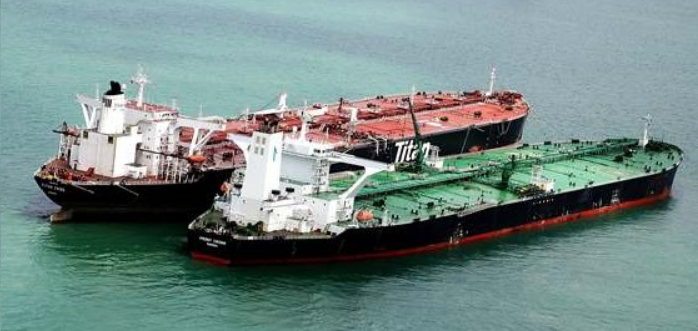
OCIMF: Considerations for mooring load analysis during STS transfers

OCIMF published an information paper to support operators in making their own assessments to determine suitable weather criteria and ascertain an appropriate weather window for STS operations.

Ship-to-Ship (STS) transfer operations take place across different geographies and under varying environmental conditions, adding to the complexity and risks associated with such transfers.

The study supports KPIs listed under element 5 of the Ship-to-Ship Service Provider Management Self Assessment, 2nd edition (2020), and it used advanced mooring line load simulation technology for enhanced assessment of mooring line loads under varying environmental conditions for a variety of ship-type combinations, including LPG and LNG carriers.

Findings applicable to all STS operations

  • The longer the wave period, the higher the load in the mooring lines and therefore the associated significant wave height threshold is reduced.
  • The wave height threshold is lower when the waves are on the beam, so beam exposure should be avoided.
  • There is a larger relative roll between the ships when the wave period is longer.
  • The daughter ship lines usually exceed the WLL before the mother ship.
  • It is generally the innermost lines (which tend to be shorter) that fail first.
  • As wave period increases, the wave height threshold decreases to a level where the threshold is insensitive to the vessel load condition and whether it is underway or at anchor.
  • In general, the smaller vessel will be protected from shorter period waves and its motion will reduce in the lee of the larger vessel. However, the larger vessel will still be affected by long period swells from either beam.

When exposed to significant wave activity, with a significant wave height, Hs, greater than about 0.5m and where the peak wave period, Tp, is greater than about 6 seconds (or where the Hs is greater than about 0.2m and the Tp is greater than about 14s), ships in an STS mooring configuration may respond significantly to the waves. Depending on the environmental conditions, this can be a cause of vessel motions and, as a result, can affect mooring system integrity. Therefore, wave effects need to be considered in an appropriate manner.

This requires a full dynamic mooring assessment. In this type of analysis, the vessel hydrodynamics are fully represented along with second-order wave effects and non-linear effects of mooring lines and fenders. The forces from waves, wind and current are usually determined for specific ships or ship types. These forces are used to calculate the corresponding time varying response of the moored vessel to the applied forces, in terms of motions and mooring forces. Statistical analyses can then be undertaken on the results to provide a much higher level of confidence than with static or quasi-static methods.

This full dynamic approach has been adopted in deriving mooring thresholds for STS operations for a range of ship type combinations, from coastal tankers to VLCCs, both underway and at anchor. In particular the following attributes are included:

  • The interaction between the real position of the vessels, their velocity and inertia, and the waves and moorings.
  • Resonance effects.
  • The principal forces acting on moored ships, such as from swell, long period waves, second order waves, wind and current (vessel water speed).
  • The effects of shallow water and the associated additional weight of entrained water when the vessel moves (added mass).
  • Roll can be exaggerated in computational ship mooring models, especially quartering to beam seas.
  • The models have been calibrated against other model results (both physical and numerical) and from site measurements, and in particular for side-by-side moored/double-banked ships.
  • In the case of STS operations, the coupling effects between the two vessels are included.

  https://safety4sea.com/wp-content/uploads/2022/10/OCIMF-STS-Mooring-Load-Guide-2022_10.pdf


EMSA Study: Ammonia as a marine Fuel

While there is little recent marine experience with using ammonia as a fuel – and some of the key machinery technologies (such as engines) are under development – extensive land-based experience with the production and use of ammonia for the petrochemical and fertiliser industries forms a sound basis for increasing its use as a marine fuel. Experience with the carriage of ammonia in liquefied-gas carriers – and the specific requirements for storage, distribution, personal protective equipment (PPE), etc. in the International Code of the Construction and Equipment of Ships Carrying Liquefied Gases in Bulk (IGC Code) – provide some of the statutory requirements to guide its application on ammonia-fuelled ships.

However, the toxicity challenges and related risks are significant and, while manageable, they will add complexity to ship designs (compared to those for conventional and other low-flashpoint fuels and gases) and will potentially limit the ships for which it is a suitable fuel. Ammonia ultimately may prove to be a more appropriate solution for deep-sea cargo ships rather than short-sea, passenger or inland waterway craft.

By examining the current production capacity for ammonia, the existing regulatory landscape, fuel storage options, supply and power generation technologies – along with techno-economic analyses and risk-based case studies – this study has identified the key challenges for adopting ammonia as fuel. It has also identified a number of advantages that ammonia would have over other low-flashpoint fuels or gases, technology and regulatory gaps that would prevent its immediate application, and some incentives that would encourage its adoption.

This report examines Ammonia Availability, Suitability, Sustainability, Techno-Economic Aspects, Regulations and Risk/Safety as major components. You can download the report below:

file:///C:/Users/User/Downloads/Potential%20of%20Ammonia%20as%20fuel%20in%20shipping.pdf