Παρασκευή 29 Ιουλίου 2022

What is General Average & the importance of York-Antwerp Rules ?

General Average

There is a General Average act when and only when any extraordinary or expenditure is intentionally and reasonably made or incurred for the common safety, for the purpose of preserving from peril, the property involved in a common maritime adventure.


 Extraordinary Sacrifice in a General Average

Below are examples for an extraordinary sacrifice, though not limited to:

1.      Damage done to the engine to refloat the vessel after grounding.

2.      Jettisoning of cargo under Deck.

3.      Jettisoning of Cargo on Deck as per Custom of the trade.

4.      Slipping of Anchor and Cable to avoid Collision.


Extraordinary Expenditure in a General Average

Below are examples for an extraordinary expenditure, though not limited to:

1.      Cost of Hiring a Tug to refloat a Ship with cargo onboard.

2.      Cost of discharging Cargo in order to refloat a ship.

3.      Port of Refuge Costs.

4.      Salvage Costs


Calculations for General Average

General Average Loss:  is any expense/sacrifice which is allowed as general average and can be recovered.

Contributory Value: is the value of the property on arrival at the place of safety + G.A loss made up for that property. Consider a vessel whose worth is 1 million (1,000,000 $) and carrying cargoes A, B and C.

Cargo A worth:  50,000 $
Cargo B worth: 120,000 $
Cargo C worth: 200,000 $
Vessel catches fire in the hold where now Cargo B is affected by the fire. Water is used for the firefighting which partially damages Cargo C as it gets wet. Free surface effect affects the stability and the Master decides to beach the ship. The vessel was subsequently refloated and the cost incurred and damages as follows:

Lost Value of Cargo B

 30,000 $

Arrived Value of Cargo C

 180,000 $

Ship arrived Value

 950,000 $

Cost of Repairs

 50,000 $

Cost of Refloating

 150,000 $

Port of Refuge Charges

 50,000 $

Thus the General Average (G.A.) Losses are as follows:

For Ship

 50,000 $

For Cargo C

 20,000 $

For Refloating & Port of Refuge Cost

 150,000 $ + 50,000 $

TOTAL G.A. Loss

 270,000 $

Please note the damage caused to Cargo B was purely due to the Fire which was an accident, hence the Lost Value of the cargo and will not be considered as General Average Loss.

Contributory Value

Ship

 950,000 + 50,000

 1,000,000 $

Cargo A

 50,000 + 0

 50,000 $

Cargo B

  90,000 + 0

 90,000 $

Cargo C

 180,000 + 20,000

 200,000 $

TOTAL:

   1,340,000 $

G.A. Loss to make good = 270,000 $

Contribution of Ship


Contribution of Owner of Cargo A

Contribution of Owner of Cargo B

Contribution of Owner of Cargo C

Thus, the total of the contribution will work out to be 270,000 $ which is the General Average loss to be made good.

Particular Average: It is a partial loss caused by a peril insured against e.g. damage to cargo, damage to ship due to weather etc.

Particular Charges: Expenses incurred by or on behalf of the insured for the safety or preservation of the property insured. It excludes general average and salvage charges.

York Antwerp Rules ( 2004 )

YARs are a set of rules set out by Ship Owners, Merchants, Underwriters and Adjusters for the benefit of the settlement of General Average.
It has to be mentioned in the 
Charter Party or Bill of Lading that G.A. will be as per York Antwerp Rules.

Evolution of York Antwerp Rules

There are 7 Lettered Rules ( A ~ G ) which are general rules and 23 Numbered Rules ( I ~ XXIII ) which are specific to a particular average act/sacrifice/damage and used for determining the calculation of the General Average.

Rule of Interpretation

In the adjustment of general average, the YARs shall apply to the exclusion of any law and practice inconsistent therewith.
Except as provided by the Rule Paramount and the Numbered Rules, general average shall be adjusted according to the Lettered Rules.

Rule Paramount

In no case shall there be any allowance for sacrifice or expenditure unless reasonably made or incurred. For example War, Strikes, Civil War, Labour Disturbances holds no cover.

Lettered Rules (A ~ G)

Rule A

1.      There is a general average act when, and only when, any extraordinary sacrifice or expenditure is intentionally and reasonably made or incurred for the common safety for the purpose of preserving from peril the property involved in a common maritime adventure.

2.      General average sacrifices and expenditures shall be borne by the different contributing interests on the basis hereinafter provided.

Rule B

1.      There is a common maritime adventure when one or more vessels are towing or pushing another vessel or vessels, provided that they are all involved in commercial activities and not in a salvage operation.
When measures are taken to preserve the vessels and their cargoes, if any, from a common peril, these Rules shall apply.

2.      If the vessels are in common peril and one is disconnected either to increase the disconnecting vessel’s safety alone or the safety of all vessels in the common maritime adventure, the disconnection will be a general average act.

3.      Where vessels involved in a common maritime adventure resort to a port or place of refuge, allowances under these Rules may be made in relation to each of the vessels. Subject to the provisions of paragraphs 3 and 4 of Rule G, allowances in general average shall cease at the time that the common maritime adventure comes to an end.

Rule C

1.      Only such losses, damages or expenses which are the direct consequence of the general average act shall be allowed as general average.

2.      In no case shall there be any allowance in general average for losses, damages or expenses incurred in respect of damage to the environment or in consequence of the escape or release of pollutant substances from the property involved in the common maritime adventure.

3.      Demurrage, loss of market, and any loss or damage sustained or expense incurred by reason of delay, whether on the voyage or subsequently, and any indirect loss whatsoever, shall not be allowed as general average.

Rule D

Rights to contribution in general average shall not be affected, though the event which gave rise to the sacrifice or expenditure may have been due to the fault of one of the parties to the common maritime adventure, but this shall not prejudice any remedies or defences which may be open against or to that party in respect of such fault.

Rule E

1.      The onus of proof is upon the party claiming in general average to show that the loss or expense claimed is properly allowable as general average.

2.      All parties to the common maritime adventure shall, as soon as possible, supply particulars of value in respect of their contributory interest and, if claiming in general average, shall give notice in writing to the average adjuster of the loss or expense in respect of which they claim contribution, and supply evidence in support thereof.

3.      Failing notification, or if any party does not supply particulars in support of a notified claim, within 12 months of the termination of the common maritime adventure or payment of the expense, the average adjuster shall be at liberty to estimate the extent of the allowance on the basis of the information available to the adjuster. Particulars of value shall be provided within 12 months of the termination of the common maritime adventure, failing which the average adjuster shall be at liberty to estimate the contributory value on the same basis. Such estimates shall be communicated to the party in question in writing. Estimates may only be challenged within two months of receipt of the communication and only on the grounds that they are manifestly incorrect.

4.      Any party to the common maritime adventure pursuing recovery from a third party in respect of sacrifice or expenditure claimed in general average, shall so advise the average adjuster and, in the event that a recovery is achieved, shall supply to the average adjuster full particulars of the recovery within two months of receipt of the recovery.

Rule F

Any additional expense incurred in place of another expense which would have been allowable as general average shall be deemed to be general average and so allowed without regard to the saving, if any, to other interests, but only up to the amount of the general average expense avoided.

Rule G

1.      General average shall be adjusted as regards both loss and contribution upon the basis of values at the time and place when and where the common maritime adventure ends.

2.      This rule shall not affect the determination of the place at which the average adjustment is to be prepared.

3.      When a ship is at any port or place in circumstances which would give rise to an allowance in general average under the provisions of Rules X and XI, and the cargo or part thereof is forwarded to destination by other means, rights and liabilities in general average shall, subject to cargo interests being notified if practicable, remain as nearly as possible the same as they would have been in the absence of such forwarding, as if the common maritime adventure had continued in the original ship for so long as justifiable under the contract of carriage and the applicable law.

4.      The proportion attaching to the cargo of the allowances made in general average by reason of applying the third paragraph of this Rule shall be limited to the cost which would have been borne by the owners of cargo if the cargo had been forwarded at their expense. This limit shall not apply to any allowances made under Rule F.

Differences Between 1994 / 2004 / 2016 YARs


https://static.igpandi.org/igpi_website/media/article_attachments/York-Antwerp_rules_adopted_by_the_CMI.pdf


GT and DWT measure

Tonnage 

Broadly speaking, ‘tonnage’ measures a ship’s size and can be expressed in terms of either volume or weight. 

Gross tonnage (GT or gt) is a measure of a ship’s overall internal volume and is determined by dividing by 100 the contents, in cubic feet, of the vessel’s enclosed spaces. GT applies to the vessel, not to cargo. It measures the ship’s volume and has nothing to do with weight. It is based on two variables: V, the ship’s total volume in cubic meters (m3), and K, a multiplier based on the ship volume. 

GT is often confused with Net Tonnage, which is a ship’s gross tonnage minus the space occupied by accommodations for crew, by machinery, for navigation, by the engine room and fuel. This means a vessel’s net tonnage represents the available space for accommodation of passengers and stowage of cargo.  

Note: GT and NT are dimensionless so they cannot be counted in physical units of tonnage. The word “tons” is no longer in use in reference to ships’ tonnage. So, we typically say “the ship has Gross Tonnage of 12,345” without the addition of any units.  

Simply put, deadweight tonnage (DWT) is a measure of how much weight a ship can carry, so it includes the sum of the weights of cargo, fuel, fresh water, ballast water, provisions, passengers, and crew. This measurement does not include the empty weight of the ship, which means that DWT represents the difference between the number of tons of water a vessel displaces “light” and the number of tons it displaces when submerged to the “load line.” As you know, load lines (also known as Plimsoll lines) on a ship’s hull indicate the maximum depth to which the vessel may be safely immersed when loaded with cargo.  

‘Gross Tonnage’ = overall size of a ship 
‘Net Tonnage’ = useful capacity of a ship
‘Deadweight tonnage’ = carrying capacity of a ship in tonnes 

Displacement 

A ship’s displacement, as the word indicates, is the volume of water it displaces when it is floating and is measured in cubic metres (m3). The displacement tonnage is the weight of the water that it displaces when it is floating with its fuel tanks full and all stores onboard, and is measured in metric tons (1,000 Kg). The term “displacement tonnage” maybe seen describing the weight of the vessel and its contents in tons of 2,240 pounds. Displacement “light” is the weight of the vessel without stores, bunker fuel, or cargo, while displacement “loaded” is the weight of the vessel including all the above.  

Regulatory landscape at a glance: The Gross and Net Tonnage measurement was established by the IMO’s International Convention on Tonnage Measurement of Ships. First adopted in 1969 and set into force in 1982, the Convention was the first successful attempt to introduce a universal tonnage measurement system. Previously, various systems were used to calculate the tonnage of merchant ships but there were significant differences in them, so the Convention addressed the need for a globally accepted system.

The Convention provides for gross and net tonnages, both of which are calculated independently. The rules apply to all ships built on or after 18 July 1982 – the date of entry into force. The Convention meant a transition from the traditionally used terms gross register tons (GRT) and net register tons (NRT) to gross tonnage (GT) and net tonnage (NT).  

Why are these useful?  

GT is not a really usable measure in everyday life, but it forms the basis for authorities, PSC and flag states, as well as classification societies to set manning regulations, safety rules, as well as registration fees. Both gross and net tonnages are also used to calculate port dues. According to Steamship Mutual P&I Club, Tonnage Measurement is used in the assessment of the following: 

§  Harbour Dues – which can be based on either Gross or Net Tonnage 

§  Pilotage Dues – which can be based on either Gross or Net Tonnage 

§  Light Dues – usually based on Net Tonnage 

§  Canal Dues – usually based on Net Tonnage 

Sometimes, the term can also be used to compare ships in terms of their size, even though a larger ship does not necessarily have also a bigger gross tonnage. To put Gross Tonnage into context, currently the world’s largest container ships by GT have a GT of just over 230,000 and the largest cruise ships by GT have just over 228,000.  

Mooring deck accident on general cargo vessel Teal Bay with loss of 1 life

Summary

On 30 August 2021, Teal Bay’s chief officer was fatally injured when he was struck by a mooring line when it sprang out of an open roller fairlead. Teal Bay was moored alongside an anchored bulk carrier, and it was being moved forward by tensioning the aft spring to allow loading to be completed. During the loading operation, Teal Bay’s mooring lines had developed an upward lead due to the change in freeboard between the two vessels and, as the line was tensioned to move Teal Bay, its upward lead angle became too great for the open fairlead to contain it.

The investigation found that the use of an open fairlead was inappropriate during the transfer of cargo where a freeboard differential created the hazard of an upward lead on the mooring lines. The chief officer was struck because he was standing in a hazardous area close to a tensioned mooring line and the operation to move Teal Bay forward was attempted with insufficient crew and had not been risk assessed.

The MAIB conducted this investigation on behalf of the Isle of Man Ship Registry in accordance with the Memorandum of Understanding between the MAIB and the Red Ensign Group Category 1 registries of Isle of Man, Cayman Islands, Bermuda and Gibraltar.

Safety Issues

  • the mooring arrangement was unsuitable for loading from alongside another vessel as the fairlead was open and could not contain the upward lead of the mooring line

  • the operation to move Teal Bay forward was attempted with insufficient planning and assigned crew

  • the lack of a coordinated and organised emergency response created delays in the chief officer being assessed by a medical professional

Recommendations

A recommendation (2022/128) has been made to the Isle of Man Ship Registry to promulgate the safety lessons in this report to vessels on the register.

Read the full report at

https://assets.publishing.service.gov.uk/media/62c57741d3bf7f2ffcafae0f/2022-9-TealBay-Report.pdf

Failure or accidental release of the lifeboat hooks can be fatal

Lifeboats are designed to save lives, but over the years there have been many serious casualties that have occurred during drills, routine maintenance operations and inspections of davit suspended boats fitted with on-load release hooks. These accidents have also resulted in seafarers losing confidence in the lifeboat launching systems.

Causes of lifeboat accidents 

Lifeboat accidents have a variety of causes. Some of the more frequently occurring ones are:

  • failure of the on-load release mechanism;
  • inadvertent or accidental operation of the on-load release mechanism;
  • inadequate maintenance of the lifeboat and its launching equipment. Sometimes the item to be maintained might not be readily accessible due to its location;
  • lack of familiarity with lifeboats and the on-load release mechanism;
  • unclear operating instructions of the on-load release/resetting mechanism; and
  • faulty design.

Broadly speaking the above causes each fall into one of the following three categories: lack of familiarity, procedural inadequacy or faulty design. As for the faulty design, non-compliant hook mechanisms should have been replaced by now, as the deadline for their replacement was 1 July 2019.

To address operators’ lack of familiarity with the mechanism and procedural inadequacy, more needs to be done. Having a crew that is fully familiar with the lifeboat hook system and the potential failure points would be the starting point.

For this the crew should carefully read through the instructions provided in the manufacturer’s manual on items such as inspection, maintenance and operation, and if need be, seek clarification directly from the maker. Also, IMO’s guidelines on safety during abandon ship drills (MSC.1/Circ.1578) should be incorporated in the safety management procedures

https://maritimecyprus.com/wp-content/uploads/2021/07/MSC.1-Circ.1578.pdf


Maritime compliance: List of Certificates and Documents required on Board - 2022 update

It is repeated that these provisions should not be read as precluding a requirement for the presentation for inspection by the appropriate authorities of certificates and other documents carried by the ship pertaining to its registry, measurement, safety, manning, classification and other related matters.
Since the issuance of FAL.2/Circ.127-MEPC/Circ.817-MSC/Circ.1462, several instruments addressed in that circular have been amended. New instruments have been added, including the International Convention for the Control and Management of Ships’ Ballast Water and Sediments, 2004 and Nairobi International Convention on the Removal of Wrecks, 2007.
The below circular lists only the certificates and documents that are required under IMO instruments and it does not include certificates or documents required by other international organizations or governmental authorities.

Click on below link to download the IMO circular:


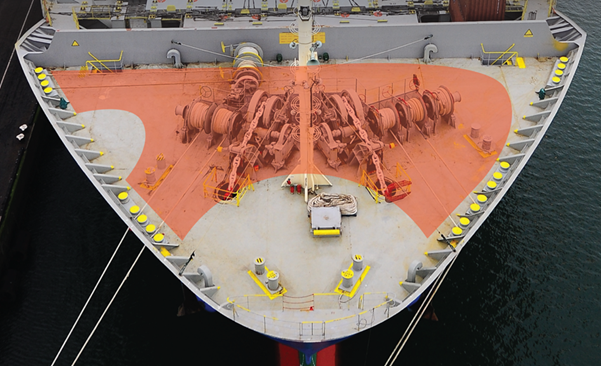
Be careful with lines under tension

Mooring deck fatalities as a result of snap-back continue to occur despite well published guidance on the hazard, warns the UK MAIB.

Parting of tensioned mooring lines has been associated with some of the worst human injuries, and loss of life registered in Gard’s claims portfolio. Use of worn mooring lines, overtightening of the brakes, or sudden movements of the ship are among the main reasons for ropes straining beyond their breaking limits and parting. 

In a safety reminder published in July 2022, the UK Marine Accident Investigation Branch (MAIB) highlights that such incidents continue to occur despite well published guidance on the subject. Even though there have been many advances in technology and automation in the shipping industry, mooring decks remain a place where people need to work in proximity to heavy lines under tension and interaction is unavoidable. For this reason, it is important that the safety guidance is followed, says the UK MAIB, and emphasizes the following three key components for safer mooring operations: 

  • Equipment: Making sure the right equipment is used and then maintained in good condition is essential to keeping safe on mooring decks. Mooring lines need to be regularly inspected to make sure that wear and tear has not degraded the line, there are no hard spots on synthetic lines and no signs of contamination by oils and greases. The lead of each mooring line needs to be considered carefully to avoid placing additional stress on the lines or introducing chafe points. Inappropriate or poorly maintained equipment has previously contributed to incidents where lines have parted or released under tension and struck crew members, therefore meticulously checking equipment for anything untoward is critical for the safety of the crew.
  • Planning and Briefing: Planning is important when conducting any mooring deck operations. The risk assessment and control measures should be reviewed for each new operation and planning should take account of the expected mooring configuration, paying particular attention to the potential risk of snapback. Areas where mooring deck operations take place need to be kept tidy and mooring lines should be closely monitored on all berths - this is vitally important when there is a large range of tide. Planning effectively also involves making sure that all seafarers are adequately briefed on the mooring configurations, that they know what to do, and that they are positioned on parts of the deck that are less dangerous. Enough crew should be on deck to conduct the job safely, but too many crew should be avoided as it can unnecessarily place others at risk.
  • Communication: Finally, crew communication is of the utmost importance when working on mooring decks, because it has the potential to be extremely hazardous if people are not able to interact clearly. Everybody involved in an operation needs to communicate effectively but must also consider the number of circuits in use. Too many voices on the same circuit can cause confusion and risk over-talking, however, using separate circuits can leave some crew in the dark. Ultimately, effective communication can be the difference between being safe and putting people at risk, therefore it is important that the mooring plan ensures that good communications can be maintained between all parties involved in the mooring operation. 

For UK-flagged ships, Chapter 26 of the Maritime and Coastguard Agency's Code of Safe Working Practices for Merchant Seafarers provides advice on the matter. Other flag states may have similar recommendations. Section 19 of the ILO’s Code of practice for accident prevention on board ship at sea and in port also provides practical recommendations and guidance related to mooring and unmooring operations. 

Further information and recommendations

It is worth noting that Safe Mooring is also on the IMO’s agenda. The safety of mooring operations is addressed in SOLAS Reg.II-1/3-8 and amendments entering into force on 1 January 2024 explicitly require occupational safety to be considered when designing mooring arrangements and selecting equipment. Furthermore, the amendments include requirements for inspection and maintenance of the mooring equipment and guidelines are provided in: 

Ship managers are advised to review their mooring procedures and, if necessary, revise them to ensure they prevent unsafe and unhealthy work situations during mooring operations. Moreover, it is important to ensure that procedures are fully understood and followed, and that seafarers are given proper onboard training to help them recognise, evaluate, and control hazards associated with mooring operations. 

Gard regularly publishes Case Studies for safety meetings focusing on the risk assessment process and identification of the chain of errors that led to an incident. One of our Case Studies addresses Mooring Operations and we encourages masters to use it as part of their training - for comparison, analysis and discussion among officers and crew onboard their ships.

https://www.gard.no/web/articles?documentId=33943949